
 Platforms
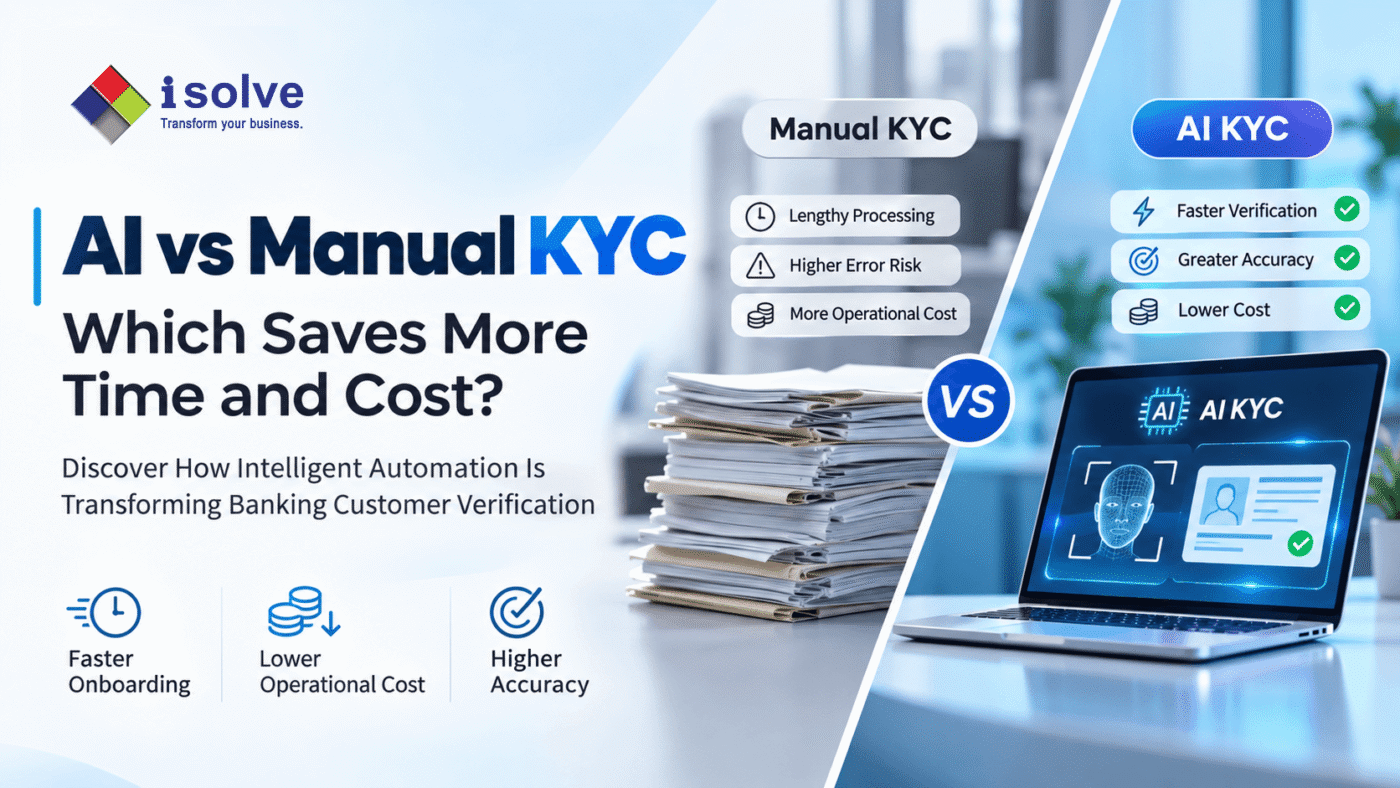
AI-powered KYC generally saves more processing time and operational effort than manual KYC because it automates document extraction, identity data capture, validation and repetitive verification activities. Manual KYC still plays an important role in exception handling and compliance oversight. For banks, NBFCs and fintech companies processing high application volumes, combining AI automation with human supervision can deliver better operational efficiency and scalability.
The Future of Customer Verification Is Faster, Smarter and More Cost-Efficient
In today’s rapidly evolving financial ecosystem, customer onboarding speed can directly influence business growth, customer satisfaction and operational efficiency. Banks, NBFCs, insurance companies and fintech platforms are continuously looking for ways to simplify Know Your Customer (KYC) processes without compromising regulatory compliance or data security.
Traditionally, KYC verification has depended heavily on manual processes. Employees collect customer documents, review identity details, enter information into systems, validate records and perform multiple verification checks. Although this approach has served financial institutions for years, it often results in longer processing times, operational bottlenecks, human errors and increasing administrative costs.
Now, Artificial Intelligence (AI) is transforming the way financial institutions approach customer verification.
With AI KYC, Digital KYC and AI Document Verification technologies, businesses can automate repetitive verification activities, extract information from documents, validate customer details and streamline onboarding workflows with significantly less manual intervention.
But an important question remains:
AI vs Manual KYC: Which approach actually saves more time and cost for financial institutions?
At iSolve Technologies, we believe the answer lies in intelligent automation. By combining AI-powered document processing, digital identity verification, CKYC integration and automated onboarding workflows, financial institutions can move beyond traditional verification processes and build a faster, more scalable customer onboarding ecosystem.
Let’s explore the differences, operational benefits and return on investment of both approaches.
1. Understanding Manual KYC vs AI-Powered KYC
Before comparing costs and processing times, it is important to understand how these two approaches work.
What Is Manual KYC?
Manual KYC is a traditional customer verification process in which employees physically or digitally review customer information and supporting documents.
The process typically involves:
Collecting identity and address proof documents.
Manually reviewing customer-submitted information.
Entering details into internal banking systems.
Comparing information across documents.
Identifying missing or incorrect information.
Performing required verification and compliance checks.
Uploading and maintaining customer records.
For financial institutions processing a relatively small number of applications, manual verification may appear manageable.
However, when onboarding volumes increase, the same process creates operational pressure. Employees spend significant time on repetitive activities instead of focusing on exceptions, suspicious cases and higher-value customer interactions.
What Is AI-Powered KYC?
AI-powered KYC uses technologies such as Artificial Intelligence, Machine Learning, Optical Character Recognition (OCR) and Intelligent Character Recognition (ICR) to automate important stages of customer verification.
Instead of manually extracting every customer detail, an AI-enabled system can identify documents, extract relevant information, populate digital forms and support automated validation workflows.
An AI-powered KYC workflow can include:
Automated document identification and classification.
AI-based OCR and ICR data extraction.
Automated customer information capture.
Identity document validation.
Face matching and liveness detection.
Aadhaar XML and offline eKYC support, where applicable.
Automated data validation and error identification.
Digital record management and audit trails.
The objective is not to eliminate human oversight. It is to reduce repetitive manual work and allow verification teams to focus on cases that require investigation or decision-making.
2. AI KYC vs Manual KYC: A Detailed Comparison
Both approaches aim to establish customer identity and support regulatory compliance. However, their operational performance differs significantly.
| Comparison Factor | Manual KYC | AI-Powered KYC |
|---|---|---|
| Document processing | Manual review | Automated OCR/ICR extraction |
| Data entry | Employee-driven | Automated data capture |
| Processing time | Depends heavily on staff availability | Faster processing through automation |
| Human errors | Higher exposure to manual entry errors | Reduced repetitive data-entry errors |
| Document validation | Manual checking | Automated validation support |
| Customer experience | Multiple interactions may be required | Streamlined digital journeys |
| Scalability | Requires additional workforce | Supports higher processing volumes |
| Operational cost | Higher repetitive workforce effort | Lower manual processing effort |
| Data management | Multiple manual activities | Centralized digital workflows |
| Audit readiness | Manual record compilation | Digital tracking and audit trails |
The key difference: Manual KYC depends on people to perform most repetitive activities, whereas AI KYC uses intelligent automation to accelerate document processing and verification workflows.
However, automated verification must still operate within the applicable regulatory framework, with human review and escalation wherever necessary.
3. Processing Time: How AI Reduces KYC Turnaround Time
Time is one of the most important factors influencing customer onboarding.
Consider a customer applying for a bank account or financial service. The customer submits identity documents, address proof and other required information.
Under a traditional manual workflow, employees may need to:
Open and review submitted documents.
Read and extract customer information.
Enter the information into internal systems.
Compare details across documents.
Identify discrepancies.
Send requests for missing information.
Complete verification and update records.
Every additional manual activity introduces another potential delay.
With AI-powered KYC, several of these activities can be automated.
How AI OCR Accelerates Document Processing
Optical Character Recognition (OCR) identifies and extracts text from digital documents, scanned files and images.
For example, when a customer uploads an identity document, an OCR-enabled solution can extract information such as:
Customer name.
Date of birth.
Address.
Document number.
Relevant identification details.
The extracted information can then be mapped into predefined digital fields, reducing the need for employees to enter the same information manually.
AI and intelligent document-processing capabilities can also support document classification, data normalization and exception identification.
The Impact on Onboarding Speed
AI-powered automation helps financial institutions:
Reduce repetitive document-review activities.
Minimize manual data-entry requirements.
Accelerate customer information validation.
Reduce avoidable back-and-forth communication.
Improve application processing visibility.
Support faster customer onboarding journeys.
At iSolve Technologies, our AI-powered eKYC and digital onboarding capabilities are designed to simplify these workflows through OCR-based extraction, identity verification, API integration and centralized process management.
The result is a more efficient onboarding experience for both customers and operations teams.
4. Human Errors vs AI Accuracy: Why Automation Matters
Human errors are an important but often overlooked cost of manual KYC.
When employees process large volumes of customer records, repetitive data-entry activities can lead to:
Incorrect customer names or dates of birth.
Missing information.
Inconsistent address formatting.
Incorrect document numbers.
Duplicate customer records.
Data mismatches during CKYC submissions.
Incomplete verification records.
Even a small percentage of errors can create significant rework when multiplied across thousands of customer applications.
How AI Document Verification Helps Reduce Errors
AI Document Verification introduces automation into the document-processing and validation stages.
An intelligent KYC workflow can:
1. Extract information automatically
OCR and ICR technology extract customer information directly from submitted documents, reducing manual typing.
2. Identify data inconsistencies
Automated validation rules can identify missing fields, formatting issues and mismatches that require further attention.
3. Support document verification
Document validation workflows help identify potential irregularities and flag records for additional review.
4. Reduce duplicate records
Automated de-duplication helps identify potentially matching customer records and reduce duplicate KYC entries.
5. Improve verification traceability
Digital workflows maintain process visibility and audit trails, making it easier for authorized teams to review activities and track verification status.
Importantly, AI-generated results should not automatically be treated as proof of authenticity. Financial institutions should combine document checks, trusted verification sources, risk-based controls and appropriate human review.
5. AI KYC vs Manual KYC: Which Is More Cost-Efficient?
Cost efficiency is where AI-powered KYC can deliver substantial long-term value.
Manual KYC creates multiple direct and indirect expenses.
Hidden Costs of Manual KYC
Financial institutions often spend money on activities that are not immediately visible in their customer acquisition costs.
These include:
Employee time spent reviewing documents.
Manual data entry and correction.
Repeated customer follow-ups.
Document storage and administration.
Duplicate record management.
Rework caused by incomplete applications.
Additional workforce requirements during peak onboarding periods.
As customer volumes increase, these expenses can grow unless operational processes become more efficient.
How AI KYC Reduces Operational Expenses
AI-powered KYC helps reduce operational expenditure by automating repetitive tasks.
For example:
OCR reduces manual document data entry.
Automated validation reduces avoidable correction efforts.
Digital onboarding reduces paper-based administration.
CKYC integration streamlines record retrieval and submission.
De-duplication reduces duplicate record handling.
Centralized document management simplifies information retrieval.
Rather than increasing operational resources proportionately with customer volume, financial institutions can use automation to improve workforce productivity and processing capacity.
Understanding the ROI of AI KYC
The return on investment of AI KYC should be evaluated through measurable operational indicators.
A simple way to estimate the potential savings is:
Monthly Manual KYC Cost
= Number of applications × Average manual processing cost per application.
Monthly AI KYC Cost
= Platform and integration costs + Human review costs + Verification and transaction costs.
Monthly Net Savings
= Monthly Manual KYC Cost − Monthly AI KYC Cost.
ROI (%)
= (Annual Net Savings − Annual Implementation Investment) ÷ Annual Implementation Investment × 100.
For a more accurate comparison, financial institutions should also consider the cost of rework, application abandonment, document storage, compliance administration and infrastructure.
The actual ROI depends on onboarding volume, document complexity, integration requirements, automation coverage and exception rates.
The important point is that AI KYC does not simply reduce processing costs. It helps financial institutions use their existing resources more productively.
6. The Role of AI in Digital KYC and Customer Onboarding
Modern customer onboarding involves much more than checking an identity document.
Financial institutions need an integrated verification ecosystem that connects customer information, document processing, identity verification, regulatory workflows and internal systems.
This is where Digital KYC becomes important.
A well-designed Digital KYC solution enables customers to complete verification through digital channels without depending entirely on physical documentation or branch-based processes.
Essential Capabilities of an Intelligent Digital KYC Platform
AI-Powered OCR and ICR
Extract and populate customer information from uploaded documents to reduce repetitive manual data entry.
Aadhaar-Based eKYC and Offline Verification
Support applicable Aadhaar-based verification workflows, including authorized offline XML-based verification, subject to consent and regulatory requirements.
PAN and Identity Verification
Integrate identity verification workflows to validate customer information through supported verification services.
Face Matching and Liveness Detection
Support identity verification through facial matching and liveness checks where required and legally permissible.
Video KYC Integration
Enable video-based customer identification workflows through appropriate V-CIP capabilities.
CKYC Search, Download and Upload
Connect with CKYC workflows to search, retrieve, prepare and submit customer records through integrated processes.
Aadhaar Masking and Secure Data Management
Protect sensitive customer information through automated masking and appropriate secure storage mechanisms.
These capabilities help financial institutions create a connected onboarding process rather than managing multiple disconnected verification activities.
7. Why BFSI Institutions Need More Than Just AI Document Verification
AI Document Verification is an important part of modern KYC automation, but it should not operate as an isolated technology.
Imagine a customer uploading an identity document.
The system extracts the information using OCR. But what happens next?
Does it validate the information? Can it identify potential duplicates? Can it retrieve existing CKYC records? Can it update the customer’s information in the banking system? Can it track the complete onboarding journey?
These are the questions financial institutions should ask before selecting a KYC automation platform.
A comprehensive solution should connect:
Document processing.
Identity verification.
Customer information validation.
CKYC integration.
Aadhaar masking.
De-duplication.
Digital document management.
API-based integrations.
Audit trails and reporting.
At iSolve Technologies, we focus on connecting these capabilities through an integrated BFSI technology ecosystem.
How iSolve Technologies Helps Transform KYC Operations
Our solutions are designed to address the practical challenges faced by banks, NBFCs, fintech companies and other financial institutions.
iStart – Digital Customer Onboarding
Our iStart digital onboarding platform helps financial institutions streamline customer acquisition through paperless onboarding, automated verification workflows, AI-powered OCR/ICR, eKYC and integration capabilities.
iFlow CKYC – CKYC Compliance Automation
Our iFlow CKYC solution supports CKYC search, downloads, uploads, customer data formatting, OCR-based data extraction, duplicate detection, error handling and real-time process monitoring.
eKYC Verification Solution
Our eKYC capabilities support document uploads, OCR-based extraction, Aadhaar XML and offline eKYC, PAN and other identity verification workflows, face matching and liveness detection.
Aadhaar Masking Solution
Automated Aadhaar masking helps protect sensitive customer information and supports privacy-conscious document processing.
Aadhaar Data Vault
Secure Aadhaar data management capabilities help financial institutions manage sensitive identity information through appropriate storage and access controls.
De-duplication Solution
Automated customer matching and duplicate detection help reduce duplicate records and improve the quality of customer information.
Document Management System
Centralized digital document management simplifies document storage, retrieval, tracking and administration.
ReKYC Verification Solution
Digital ReKYC workflows help financial institutions streamline periodic customer information updates and verification activities.
Together, these capabilities help organizations move towards a more connected, efficient and scalable KYC environment.
8. Compliance, Data Security and Human Oversight: The Foundation of AI KYC
Speed and cost savings should never come at the expense of regulatory compliance.
In India, financial institutions must follow applicable Reserve Bank of India (RBI) KYC requirements, the Prevention of Money Laundering Act (PMLA), related rules and relevant UIDAI requirements when using Aadhaar-based verification.
The RBI’s KYC framework addresses customer identification, customer due diligence, ongoing due diligence and record management.
This means that implementing AI does not remove the responsibility of regulated entities to establish appropriate verification, monitoring and record-keeping processes.
An effective AI KYC framework should include:
Consent-based customer data collection.
Secure document transmission and storage.
Role-based access controls.
Data encryption.
Aadhaar masking wherever applicable.
Digital audit trails.
Exception management and human review.
Appropriate retention and deletion policies.
Integration with authorized verification channels.
For Aadhaar offline verification, UIDAI’s legal framework specifically addresses informed consent and restrictions on the collection, use and storage of Aadhaar information.
At iSolve Technologies, we believe intelligent automation must work alongside security, transparency and compliance-driven processes.
AI should strengthen compliance operations, not replace regulatory accountability.
9. How to Calculate the Business Impact of Switching to AI KYC
Before implementing an AI-powered KYC platform, financial institutions should establish their existing operational baseline.
The following KPIs can help measure the impact.
| KPI | What to Measure |
|---|---|
| Average KYC turnaround time | Time required to complete verification |
| Cost per KYC | Total processing cost per customer |
| Manual intervention rate | Percentage of applications requiring manual processing |
| First-time success rate | Applications completed without rework |
| Document rejection rate | Applications rejected due to document issues |
| Duplicate detection rate | Potential duplicate customer records identified |
| Customer drop-off rate | Customers abandoning onboarding |
| Processing productivity | Applications handled per employee |
| Compliance readiness | Availability of records and audit trails |
Financial institutions can compare these metrics before and after implementation to understand actual performance improvements.
For example, if a bank processes thousands of applications every month, even a modest reduction in average processing time can free up considerable employee capacity.
Likewise, reducing repetitive document handling and correction activities can improve productivity without continuously expanding operational teams.
The best AI KYC implementation is therefore not simply the one that processes documents faster. It is the one that produces measurable improvements across the entire customer onboarding lifecycle.
10. The Future of KYC: Moving Towards Intelligent, Automated and Paperless Banking
The future of KYC is moving beyond basic document digitization.
Financial institutions are increasingly looking towards intelligent workflows that combine AI, machine learning, digital identity verification, APIs, centralized document management and automated compliance processes.
Future-ready KYC platforms will increasingly focus on:
Intelligent document classification and extraction.
Automated identity verification.
Risk-based customer onboarding.
Advanced duplicate detection.
Connected CKYC ecosystems.
Seamless API-driven integrations.
Improved exception management.
End-to-end onboarding visibility.
For banks, NBFCs and fintech organizations, this transformation creates an opportunity to improve operational efficiency while delivering more convenient customer experiences.
At iSolve Technologies, we are focused on helping financial institutions simplify complex KYC and onboarding operations through practical, scalable and technology-driven solutions.
Conclusion: AI KYC Is the Smarter Long-Term Investment
So, AI vs Manual KYC: Which saves more time and cost?
For financial institutions handling growing customer volumes, AI-powered KYC generally offers greater potential for operational efficiency, faster processing and long-term cost optimization than fully manual verification workflows.
Manual KYC still has an important role in exception handling, complex verification cases and compliance decision-making. However, depending entirely on manual processes can limit scalability and increase repetitive operational effort.
AI KYC brings a more intelligent approach by automating document extraction, reducing manual data entry, supporting validation and connecting different verification activities into a streamlined workflow.
The real opportunity is not to replace human expertise. It is to empower financial institutions with technology that allows their teams to work smarter, faster and more efficiently.
Transform your KYC operations with iSolve Technologies.
From AI-powered OCR and eKYC to CKYC automation, Aadhaar masking, de-duplication and digital customer onboarding, iSolve Technologies helps BFSI organizations build a more connected and efficient customer verification ecosystem.
Ready to move beyond manual KYC?
Connect with iSolve Technologies to explore how our intelligent Digital KYC and customer onboarding solutions can help optimize your verification workflows, reduce operational effort and accelerate customer onboarding.
Frequently Asked Questions (FAQs)
Manual KYC requires employees to review documents, enter customer information and perform verification activities. AI KYC uses technologies such as OCR, machine learning and automated workflows to streamline document processing, data extraction and validation.
AI reduces repetitive manual activities through automated document classification, OCR-based information extraction, digital data capture and validation workflows. This helps financial institutions process applications more efficiently.
AI-powered KYC can reduce operational costs by minimizing manual data entry, repetitive document reviews, correction activities and administrative overhead. Actual savings depend on onboarding volume, implementation costs and automation coverage.
AI Document Verification uses intelligent technologies to extract, classify and validate information from customer documents. It helps banks and financial institutions streamline identity verification and identify potential inconsistencies requiring further review.
Yes. AI-enabled KYC platforms can integrate with CKYC workflows to support customer record searches, downloads, data formatting, uploads, duplicate detection and submission tracking through appropriate APIs and integrations.
